
Cinnabar, quicksilver or mercury, it is all the same element. The hills to the south of San Jose used to contain a lot it, whatever you decide to call it. Most of the mercury, used to separate gold from the surrounding rock, was mined and sold during the California gold rush. While much of that cinnabar was mined there remains a significant amount left in the hills making fishing in the Guadalupe watershed hazardous for consumption. Eating those fish full of mercury is very hazardous to your health. Nonetheless, after percolation into the water table, the water is drinkable and that is why the Santa Clara County Water District made Calero Reservoir. At only 2.2 miles long it is not exactly large, but it is big enough for fishing (catch and release only) and boating.

Getting your boat into many lakes and reservoirs within California is a challenging process due to the zebra mussel, a prolific reproducing mussel and invasive species that clogs pipes and other apparatus used by municipal water agencies. A boat inspection and fee must be paid to confirm the vessel has no zebra mussel hitch hikers. I recently purchased another kayak and hadn’t been in Calero for several years. It is close to the house and I figured it was easier to retrieve a potentially leaky boat in shallow fresh water than to sink in Santa Cruz Harbor and Monterey Bay. Having paid the fees and passed the inspection, I put my new-to-me Redfish kayak in the water to check its nautical qualities.
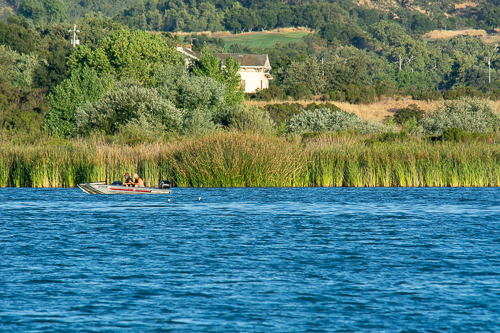

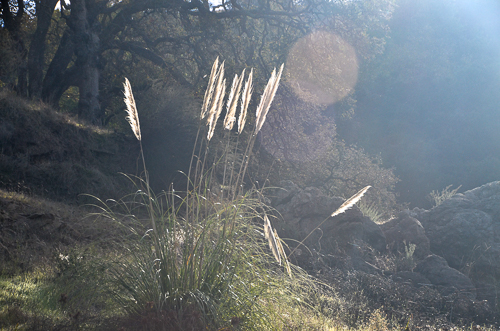

Calero is a great wildlife viewing lake and well suited to paddle craft. A kayak is a great platform for photography, especially on a smooth lake. A talk with the ranger revealed a bald eagle nest resides alongside the bank which gave me something to keep a look out for, in addition to the dear, great blue heron and snowy egrets, an osprey, and other waterfowl. In fact, this is a great place for amateur ornithologists and casual bird watchers.


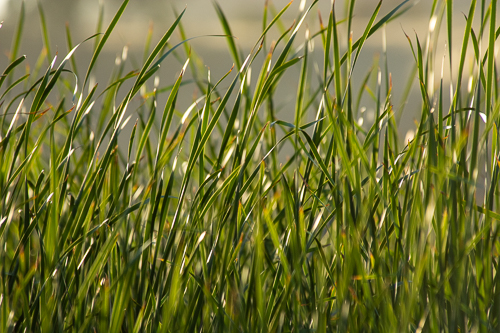
The reservoir is fed by four streams, mostly rain run off in the rainy season. Tule plants grow along the side of the lake make the stream entrances easy to identify. Over time they have intruded into the lake and consequently have made it more beautiful over time. The tule patches provide good fishing holes, give both paddle and power boats a place to go and are a good place for shore anglers to spend a day via a trail that circumnavigates the lake.

During my four plus mile round trip paddle of the lake to confirm the seaworthiness of my “new” kayak, I spotted a dear (actually, it spotted me) and a variety of waterfowl and plant life. I had a waterproof Nikon AW100 with me on the boat to record both video of the paddle and stills if the opportunity presented itself. As the comfortable summer morning approached noon, I took a few pictures of the lake and some of its guests.
Not having spotted either the osprey or eagles, I decided to return for an evening photo session to take advantage of the golden hour. During my return trip I had the chance to enjoy the soft golden shades of the late day sun, chat with a few anglers, and listen to boaters and personal watercraft people talk about “that photographer with the really big lens.” For the evening session I brought out my Nikon D7100 that was matched with a Nikon 70-400mm zoom lens most of the time. The crop factor on the D7100 is 1.5 making the field of view equivalent to 600mm on a 35mm or full frame camera. There is a lot to see at this local reservoir and it provides an opportunity to slow down and enjoy both nature and what people do in wild, natural settings.


I am sure I’ll be returning in the coming months, camera in hand and boots on the trails. Due to COVID the county has temporarily suspended the entrance fee making trips easy and convenient.
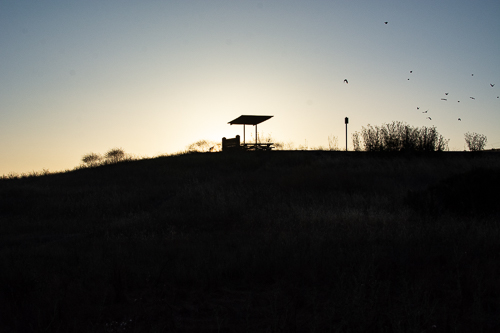



 Talkin' about the past, photographing the present