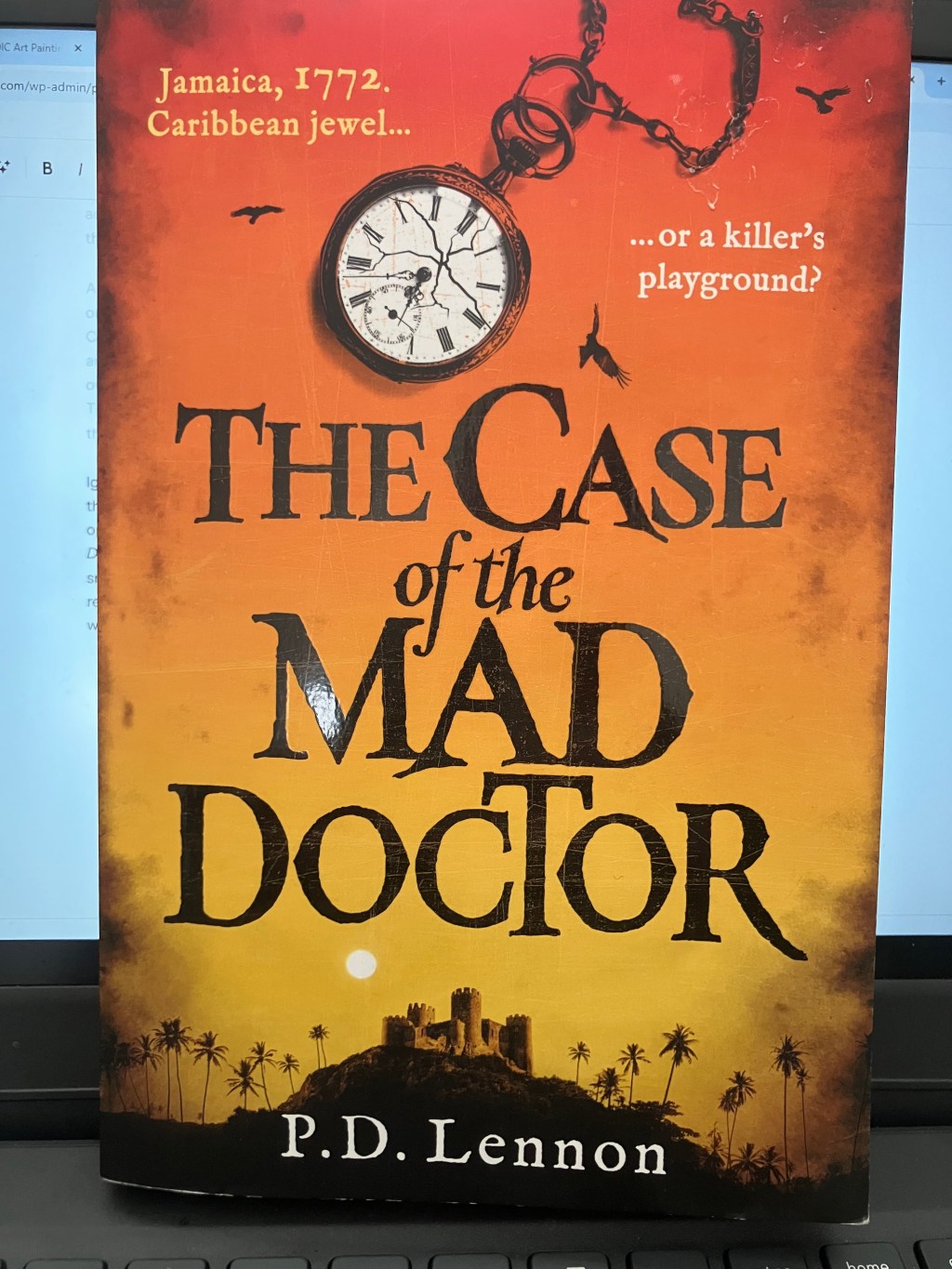
One of the beauties of fiction is putting things together that don’t necessarily exist in real time. Such is the case with Isaiah Ollenu, P. D. Lennon’s lead character in The Case of the Mad Doctor. Isaiah, is a Black Lawyer, a nearly impossible situation in 1770 London. Tasked by his employer with a trans-Atlantic journey to find a missing person, Isaiah must contend with prejudice on a variety of fronts. He is too smart and “doesn’t know his place”, and there are people who would rather put him on a labor gang as is befitting his race, according to their point of view. Isaiah turns the table and uses his intelligence and his race to access a part of Jamaican society a white lawyer or investigator couldn’t.
It makes for a good story, however, modern law as we know it with defense attorneys and cross examination was emerging in this time period, according to Representing the Adversary Criminal Trial: Lawyers in the Old Bailey Proceedings, 1770-1800 (accessed online https://eprints.whiterose.ac.uk/id/eprint/80944/1/Shoemaker%20Final%20May%202012.pdf) making this particular plotline highly unlikely for its day. Moreover, the whole process of investigation and a professional police force to keep order on the streets was new during the time period of The Case of the Mad Doctor. Like much of society in the 18th century, who could be involved on the law side was highly racial in nature.
These two things, criminal investigation and even the idea of Black lawyer make Lennon’s fiction a good read for today. Historical fiction is usually written for a contemporary audience and not intended to be strictly informational. Assigned the task of going to Jamaica on assignment, Isaiah must put his life and his freedom at stake to accomplish his task. From the beginning the assignment looks like a set up. As is often the case, the reader must suspend reality to coopt the story.
A Black man in Jamaica in the 1770s had a life expectancy of about eight years working on the sugar plantations, the principal reason to continually import slaves to the Caribbean during the time period. Jamaica for a time was a leading producer of sugar and slaves were disposable cogs in the wheel of sugar production and profit for their owners. This prosperity was built on the labor of slaves who died in appalling numbers. The casualty rate was so high it isn’t a stretch to say the blood of the slaves sweetened the table of Europe.
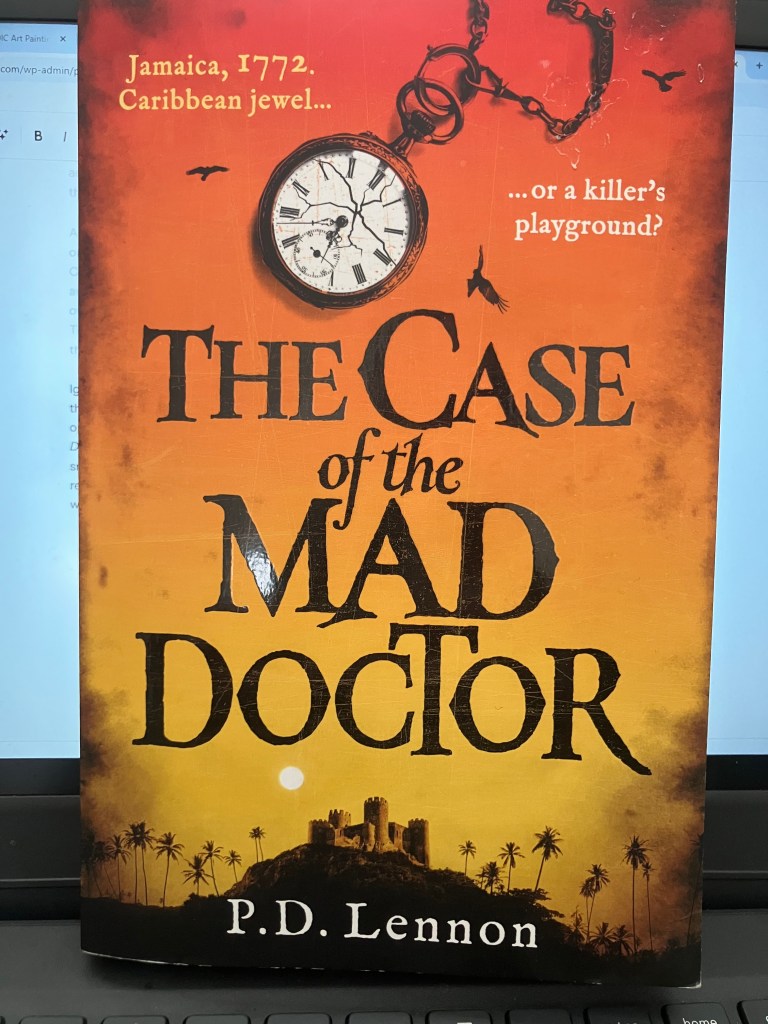
Ignoring the reality of the time and the situation and suspending reality for the sake of the story, Lennon weaves her story of individual courage, empire, greed, and opportunity with aplomb. Part historical fiction and part mystery, The Case of the Mad Doctor is ideal airport or beach reading. At just over three hundred pages her narrative is snappy and the chapters short making for a page turning novel. Although you shouldn’t read this for its historical content, don’t be surprised if you learn something along the way.