I was recently at Morro Bay on the central coast of California. In addition to wanting to get away for a few days and try out my newly carved two-piece Greenland paddle, I wanted to take some pictures. Morro Bay was in rare summer form with sunny comfortable days devoid of overcast clouds or low hanging fog, very unusual for the central coast in the summer. With all that beautiful blue sky I decided to do some sunset shots. Not another sunset! You say. I know they are all over the internet. I usually avoid the urge because I have so many; this was my chance to play with the sunset colors off the water and focus on the edge of Morro Rock. My plan was to focus on a little rim light on the edges of the old volcano core.
The first night we saw wonderful orange and blue reflections off the bay as we ate dinner. We were about midway in the bay and I made a commitment to enjoy the moment without the camera. We would take pictures the next night. The conditions were identical to the night before but my position along the bay, closer to the northern end my Morro Rock made for a different point of view on the bay. The oranges and blues of the previous night were just a memory as the angle of view had changed. At some point I decided to get a starburst as the sun set along the side of the rock. At that point I had two choices: take out a starburst filter or do the shot without the added filter.
Use a starburst filter or stop down the lens?
A starburst filter is etched to make the sun follow the lines scratched onto the face and create the effect. They come in 4 through 16 points. One disadvantage of using the filter is that you sacrifice sharpness in the rest of the photo. If the focal point of the picture is only the starburst this isn’t an issue. But if the starburst is only to add mood the sacrifice might be too big. I decided to go with a clean lens.
The starburst effect is caused by refraction of the light as it passes through the lens. A large aperture leaves the photo with an orange or yellow sunset blob. The method to get the burst is to stop down the lens to f16 or smaller. Of course, you run the risk of lens flare when you do this. The way to handle lens flare is to try different angles and change the focus of the lens to something else other than the sun. Adjustments also need to be made to “fool” the in-camera meter or it will meter the sun and everything else will be black. The opposite is also true, metering something dark will clip or blow out the sun. I recommend looking at the photo through aperture priority, check the histogram, and then go to manual for final adjustments or use the +/- EV on the camera.
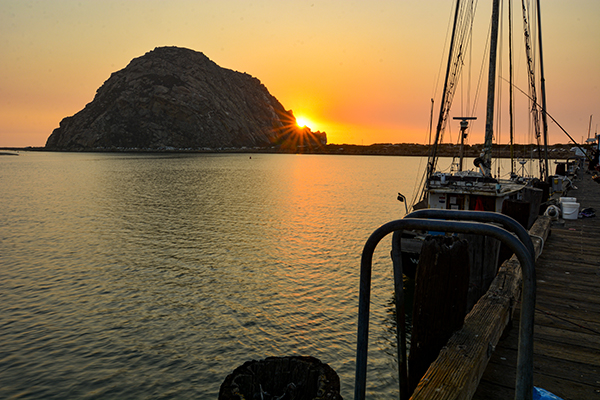
Here we are. I didn’t know if I really accomplished my task until I downloaded the picture to the computer. Like many photographers I have GAS (gear acquisition syndrome) which results in a loss f spendable income in my wallet when I see the new thing that promises to transform my photography. Usually, all I really needed was more education or to slow down and make photos instead of taking them. This was certainly the case here.

 Talkin' about the past, photographing the present