I was looking at some of my old photos recently and pondering David DuChemin’s newest advice about making the big scene the subject of a photo. He cautioned misusing the “fill the frame” advise as always meaning something from the macro world. Advice for a beginning photographer can become a handicap as you continue to pursue this art where the tool is a camera and dark room.
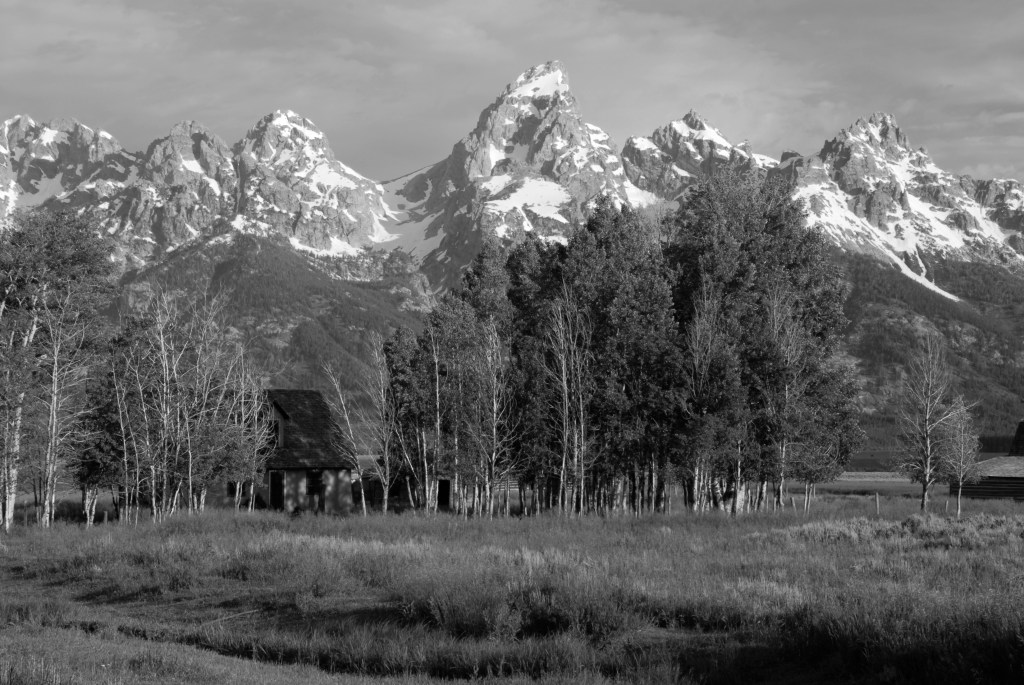
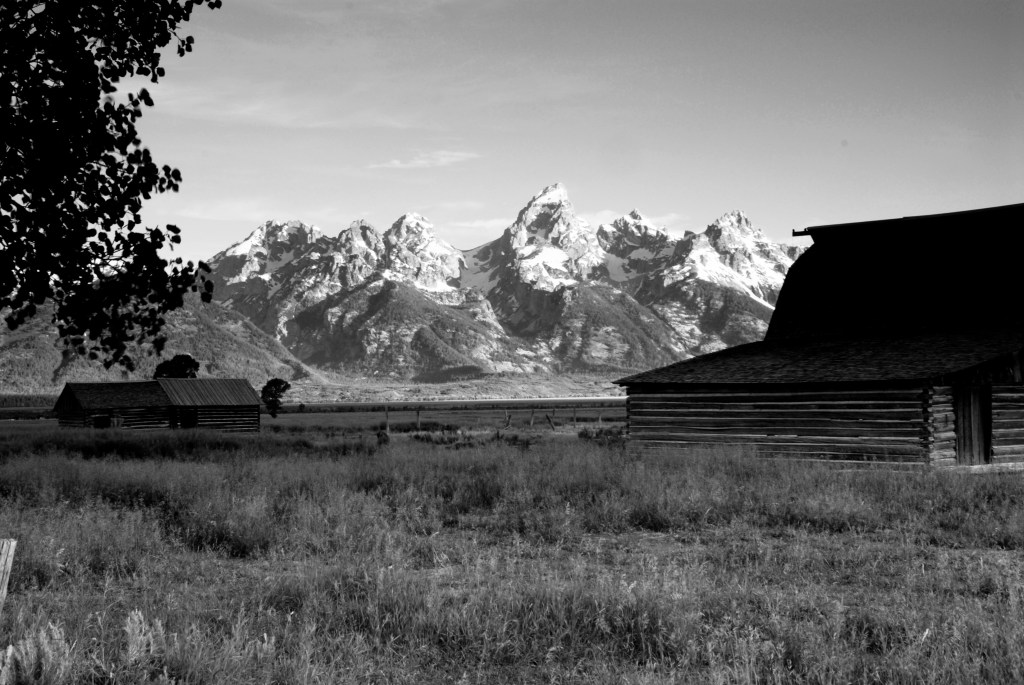
This advice to make the bigger scene the subject holds true for street photography as well as nature images. Context can be key to a more complete understanding of the moment frozen in time by your shutter. DuChemin’s post challenged me to reexamine images I had taken at the Grand Tetons. Morman Row, now under the National Parks administration, was once privately owned. More than a reminder of the Homestead Act, the scene represents Americans taming the wild and beautiful west in the mid-20th century. It’s title, Morman Row, presents a challenge for visitors to explore the role Brigham Young and the Latter-Day Saints played in settling the west. The history and beauty of the scene demanded slow, thorough treatment.
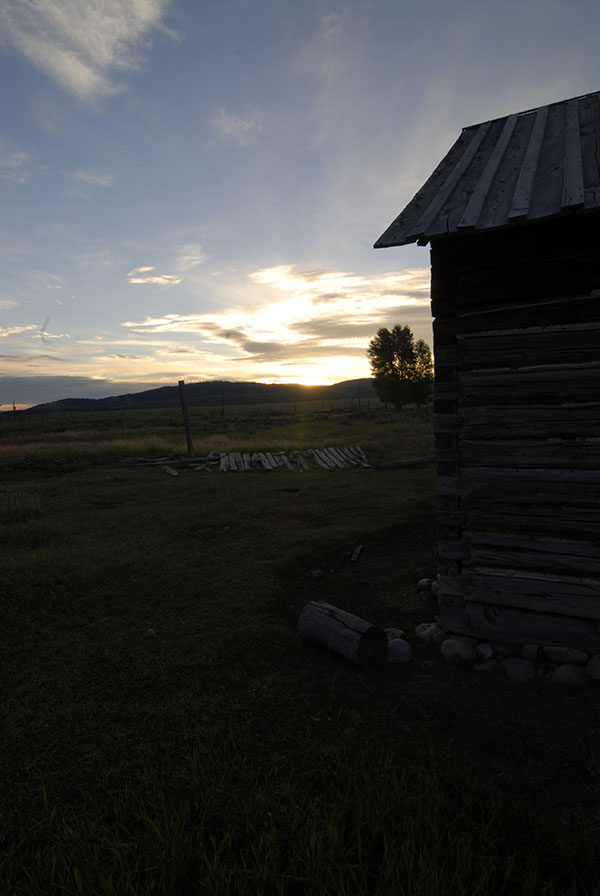
Photographing nature requires patience. Things don’t happen when it’s convenient, they happen when they happen. Even for events as simple as sunrise and sunsets, things make their own schedule. Starting as the sun rose over my shoulder, armed with a split neutral density filter, a tripod with remote shutter release, and a broad brimmed hat, I was ready for whatever the morning had in store. You can see in this first unedited photo I took a few shots to view on the screen and confirm what I thought I knew about the lighting of the scene. It was too soon for a wall shot, but I knew that. Back in the day I would have loaded a Polaroid back on my Mamiya 645 so I could have that instant look but with a digital camera I just had to look at the back. DuChemin calls these sketch images.
The next photo was later when I was ready to slip in a split neutral density filter to balance the light between the bright sky and darker foreground. As with the first shot, this frame confirmed what I already knew about adding the filter.
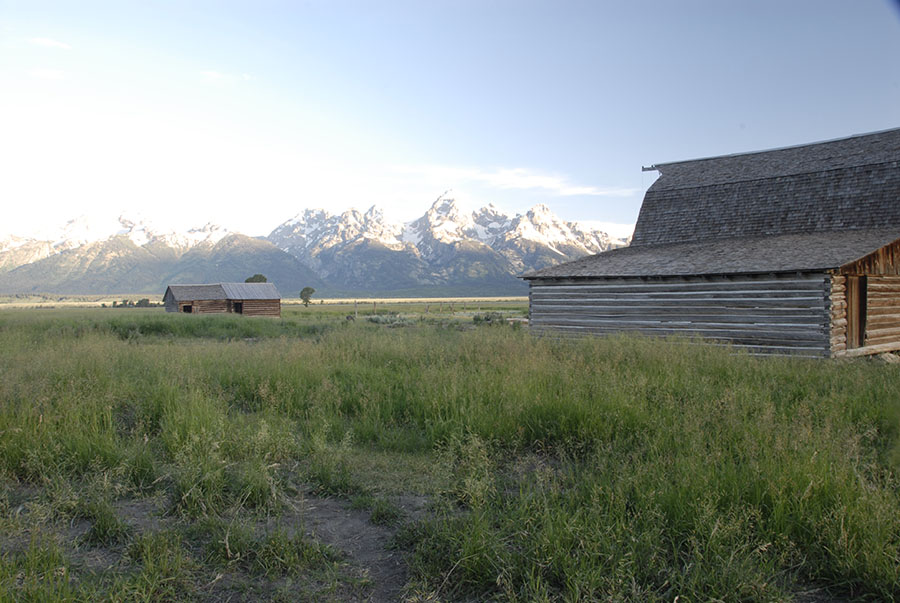
The last photo in this sequence is the result of changes made in the field and later in Photoshop. Good exposure, good composition, and a wide angle to make the scene the subject without limiting the viewer to only the mountain peaks or the barn. This one is the keeper.
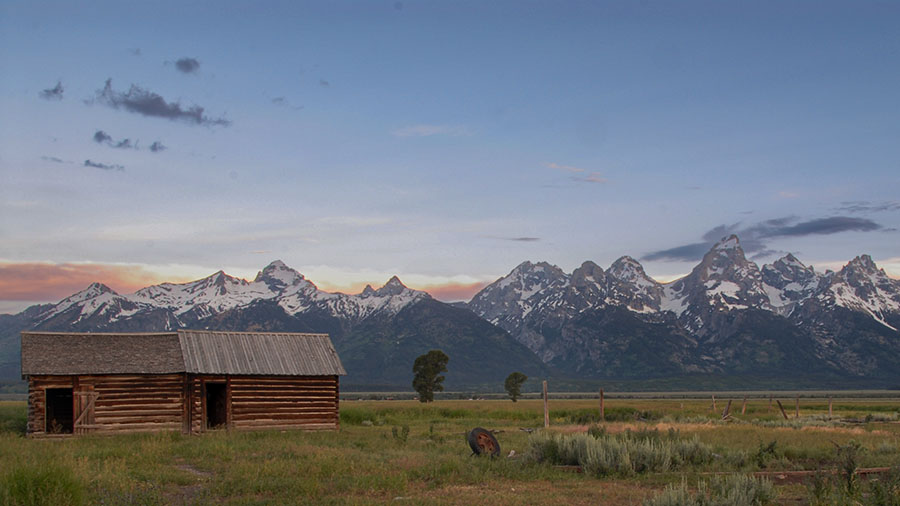
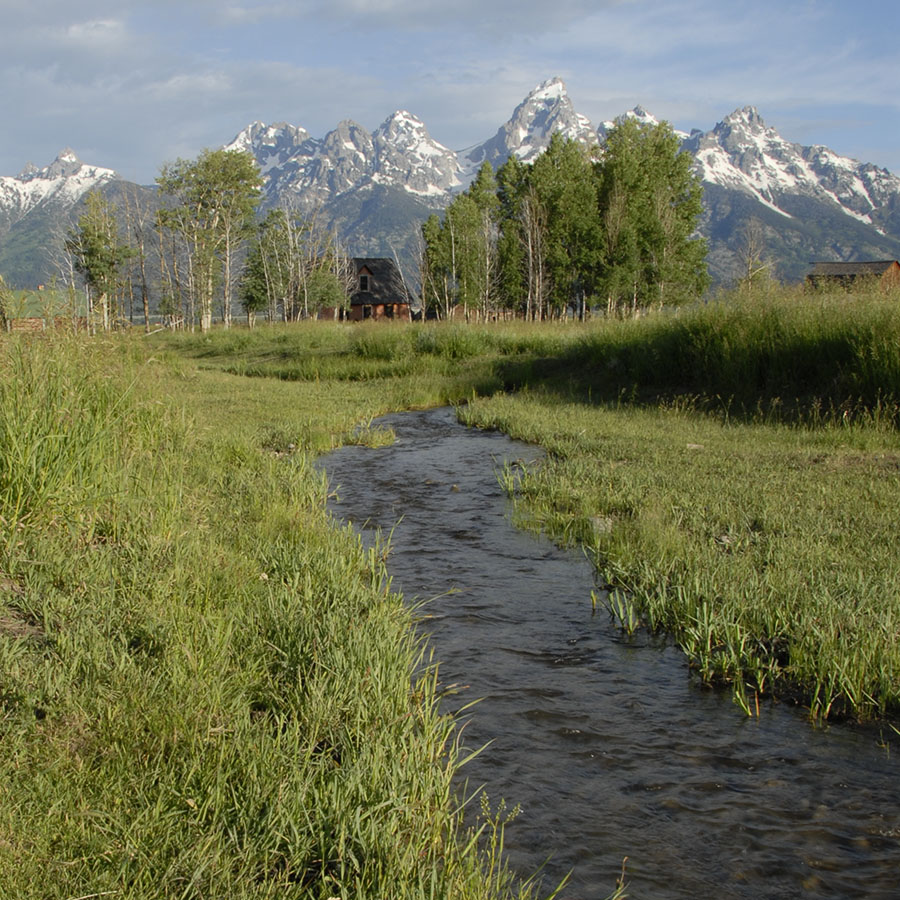
Unlike a tourist I met at the Grand Canyon of the Yellowstone who stood next to me with his iPad, took one shot and said, “Got it!” I wasn’t satisfied with this single point of view. The area invited various angles and elevations. The prairie was well watered and showing the creeks along with the property improvements was important in telling the larger picture of the pioneers who made this place work as a home and business.
In the field I knew I wanted to try my hand at classic photography as represented by black and white images. I didn’t shoot film in those days. Instead, I had a new program to help me with this black and white task, Silver Efx Pro. What a marvelous program for aspiring black and white photographers in the digital age! How do you like it?